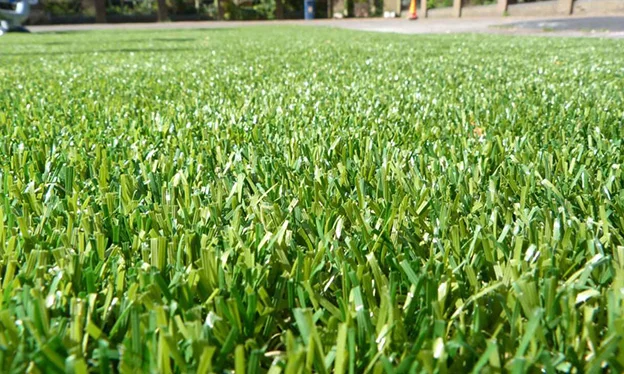
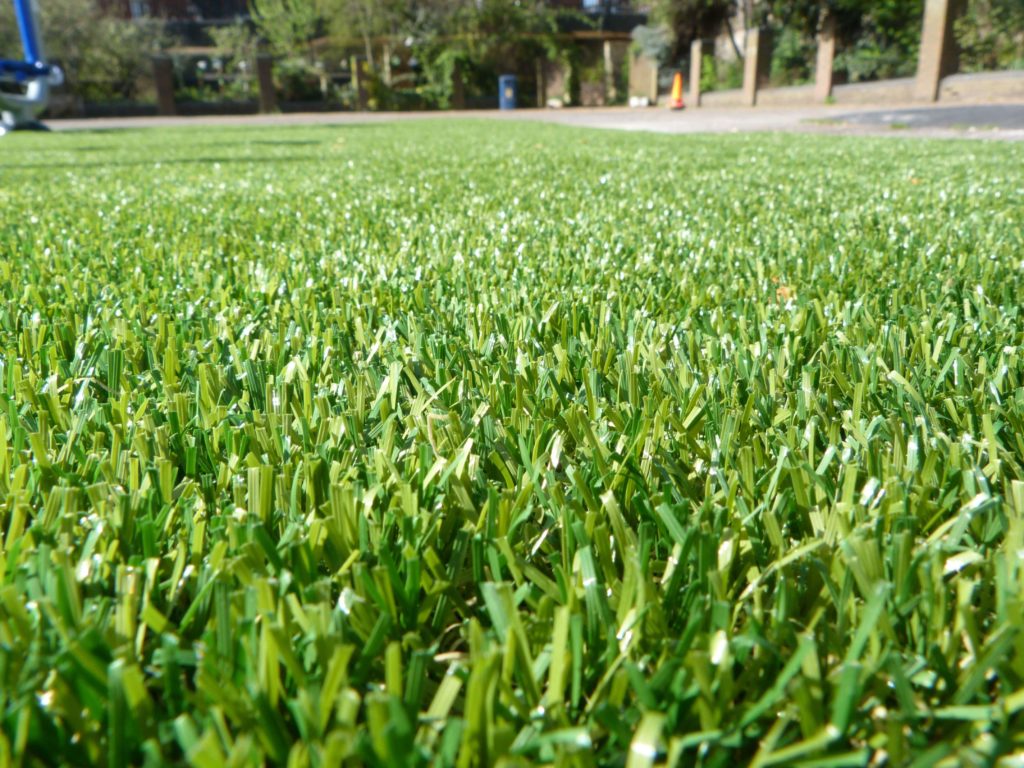
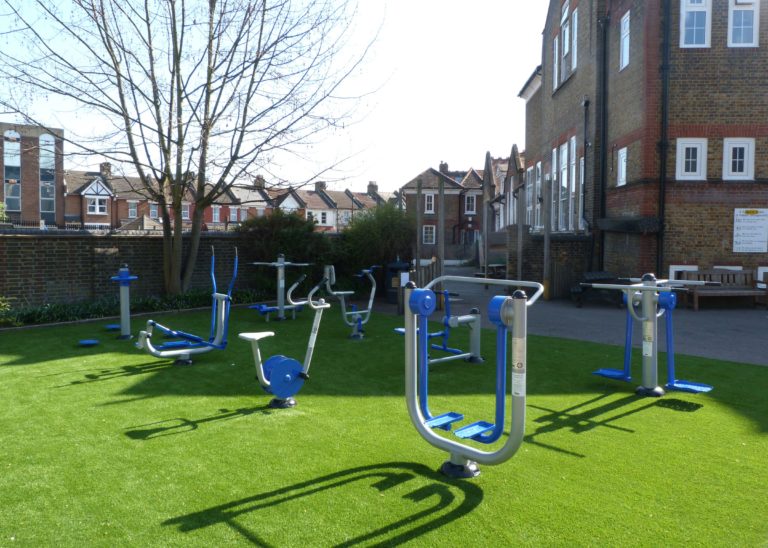
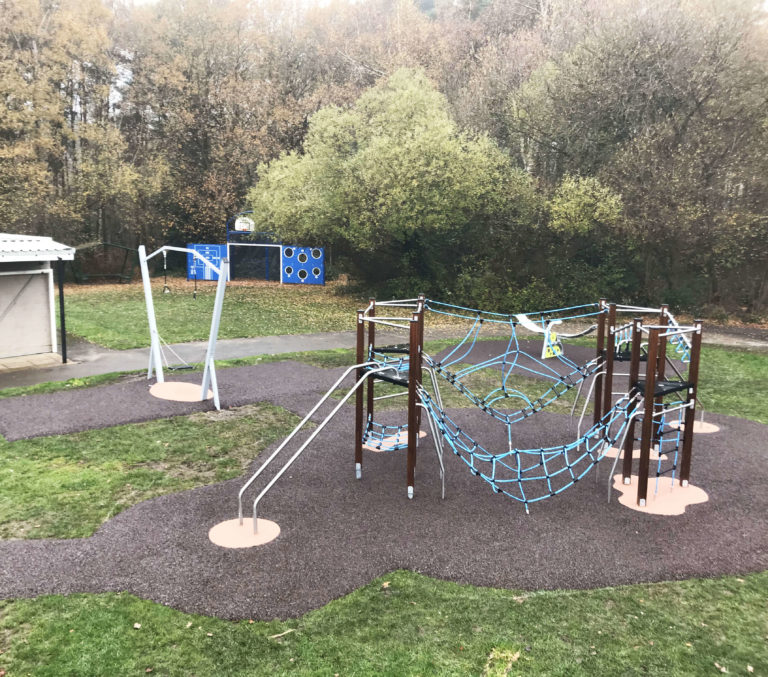
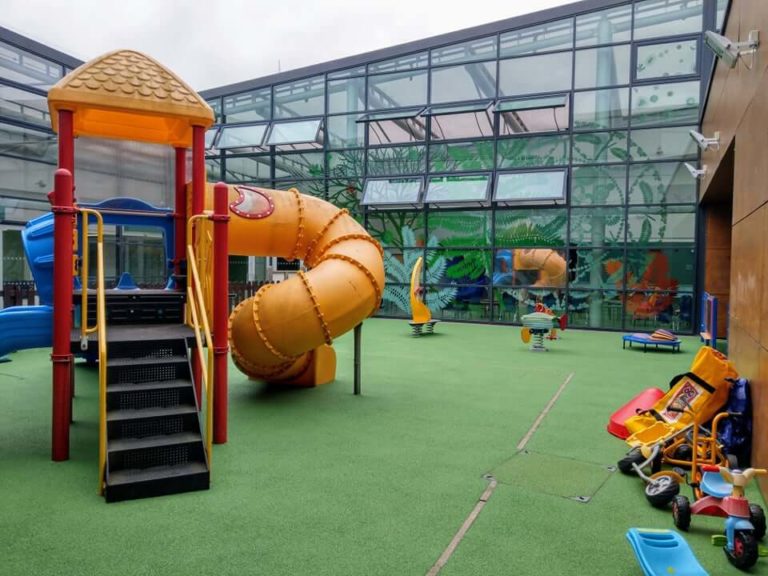
Artificial grass keeps a play area open on the days real grass turns to mud. We supply and install it across schools, nurseries and parks, laid over a shockpad where equipment needs impact protection and free-draining underneath so it dries within minutes of rain.
Real grass in a school playground gets roughly six good months a year. Artificial grass gets twelve, and does it without mowing, seeding or the six weeks of fencing off that reseeding requires.
Usable every day of the year – It drains within minutes and does not churn, so wet mornings stop being the reason outdoor play is cancelled.
No mowing, no reseeding – Maintenance amounts to occasional brushing and clearing leaves, which frees up grounds budget for things that need it more.
Impact protection built in – Laid over a shockpad, artificial grass meets critical fall height requirements under equipment while still looking like a lawn.
Survives the worn spots – Goalmouths, gate lines and the paths children actually walk stay green instead of turning to the bare mud that real turf never recovers from.
Softer than the alternative – Where the only realistic option is tarmac, artificial grass gives a considerably kinder landing for the same year-round availability.
Only with a shockpad beneath it. Artificial grass on its own has almost no impact absorption, so under equipment we lay a rubber shockpad first, specified to the fall height. Grass laid straight onto stone is fine for a kickabout area but is not a safety surface.
Does artificial grass drain?
Yes. The backing is perforated and sits on a free-draining stone base, so water passes straight through. Most installations are usable within minutes of heavy rain, which is the main reason schools choose it over turf.
How long does artificial grass last in a playground?
Eight to twelve years in normal school use. High-traffic routes flatten before the rest, and brushing the pile back up two or three times a year makes a noticeable difference to how long it looks good.
Can artificial grass be laid over an existing surface?
Over tarmac or concrete, yes, usually with a shockpad in between. Over soil or existing turf we need to excavate and build a stone base first, otherwise the surface will settle unevenly within a year.
What does artificial grass cost for a playground?
It depends on the pile specification, whether a shockpad is needed and how much groundwork the site requires. The grass itself is rarely the biggest line on the quote. We price from a survey so the base build is included rather than discovered later.