Welcome to our new website, we’ve rebranded.
Home / Products / MUGAs / Multi-Use-Games-Area Surfacing
Product Range

Multi-Use-Games-Area Surfacing

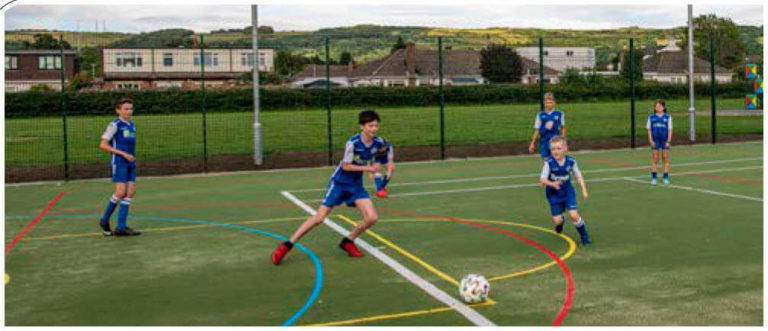
MUGA surfacing is what makes a court playable. We specify and install polymeric, 3G sports grass and acrylic systems, finished with thermoplastic line markings, so every multi use games area we build grips, drains and performs for the sports it was designed to carry.

Sub-category (Redesign)

Filter

Sub-category
Sub-category (Redesign)

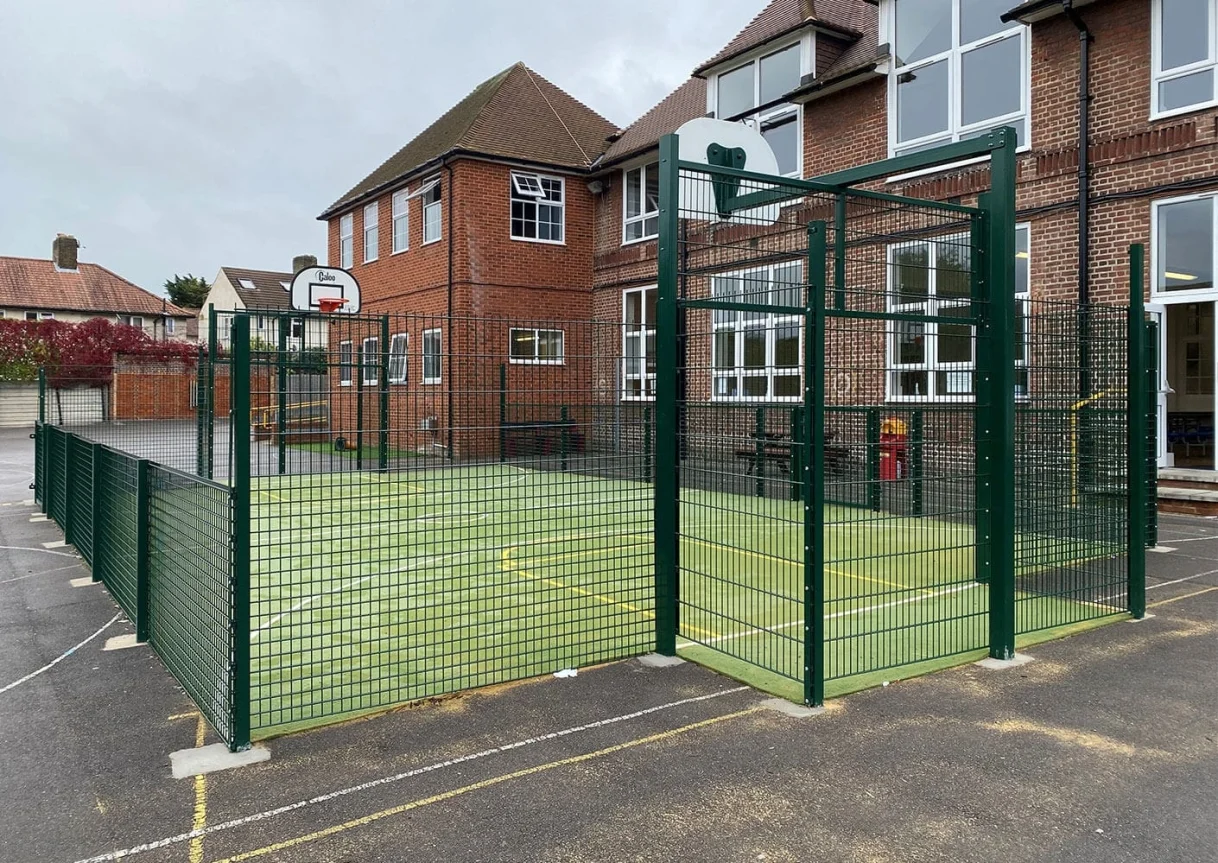
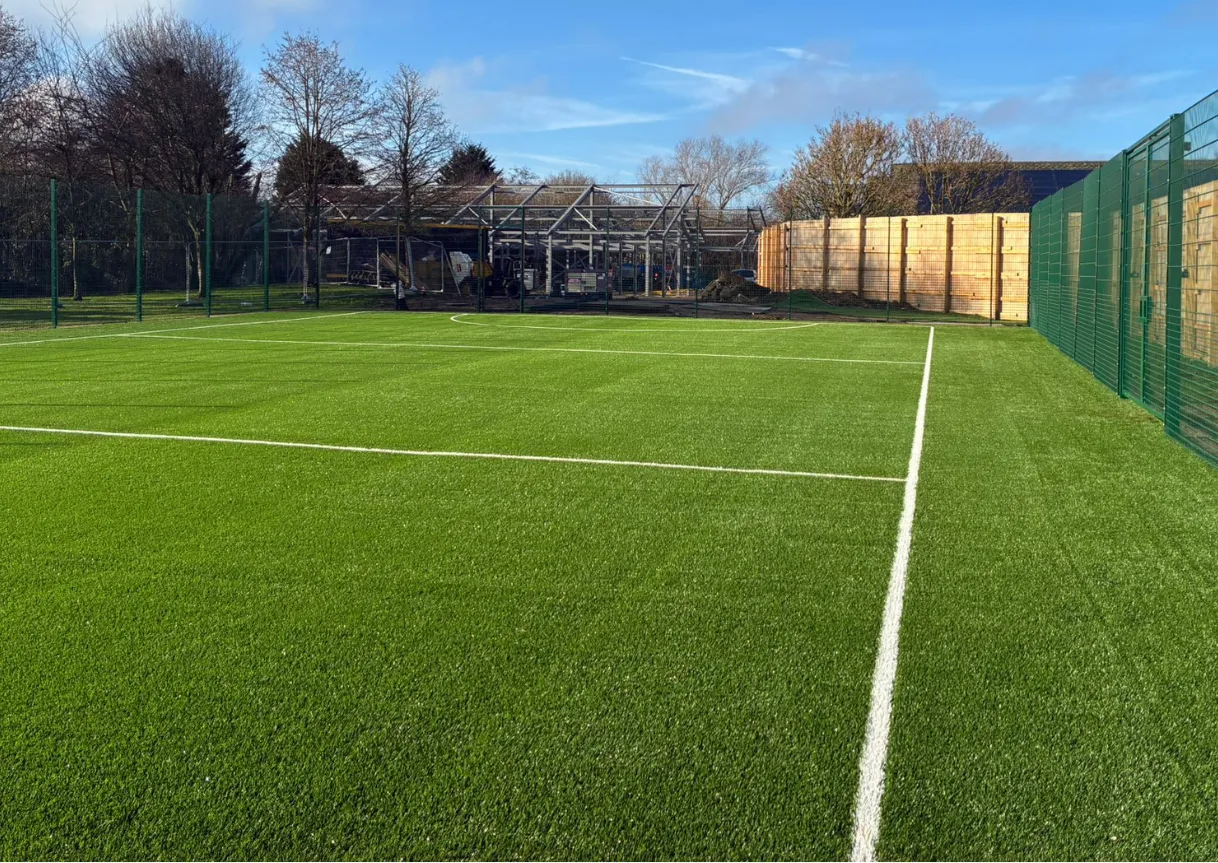
3G Sports Grass

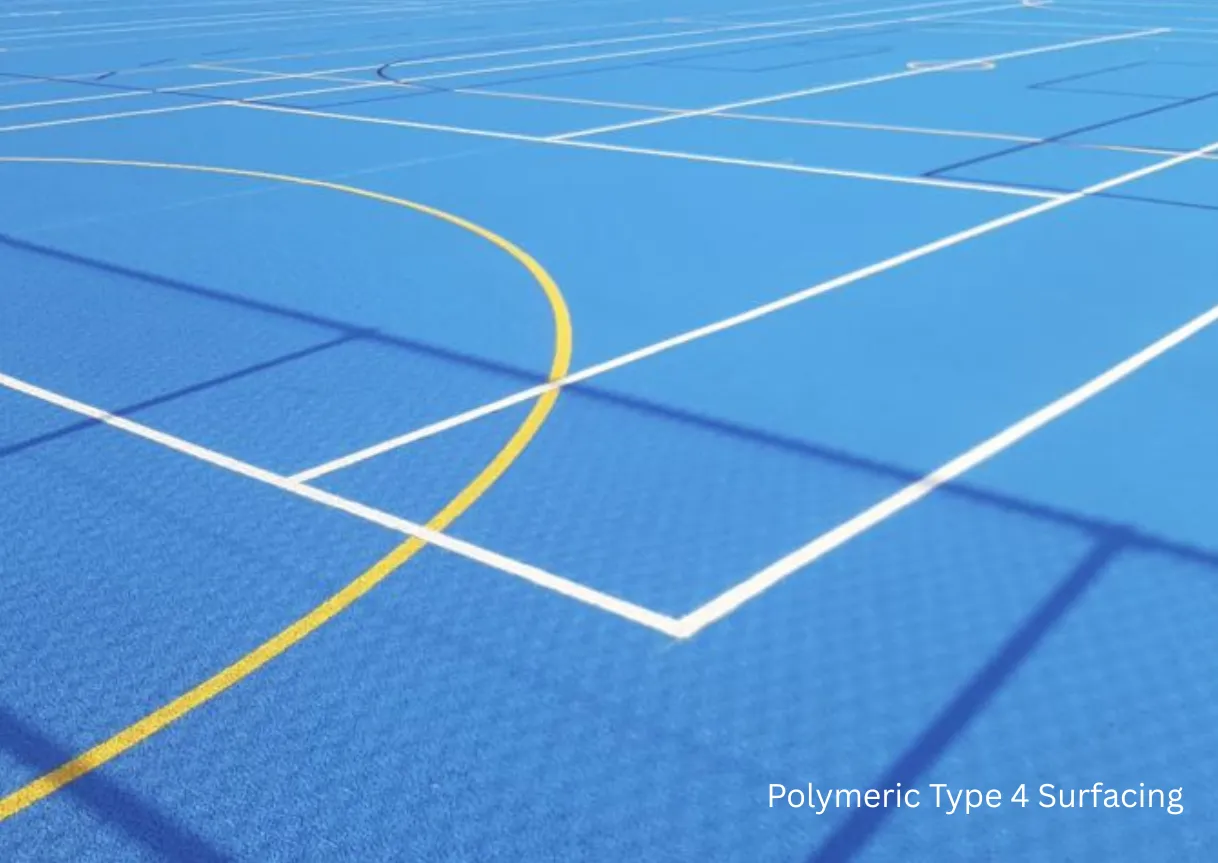
Polymeric Surfacing

Custom Multi Use Game Areas (MUGAs)

Thermoplastic Line Markings

Acrylic Coating

Why it matters

The Benefits of MUGA Surfacing

The surface decides how a MUGA plays, how safely it plays and how long it lasts. We match the system to the sports you prioritise rather than fitting the same specification to every site, which is why our courts still perform a decade after handover.
  • Grip in all weather – Textured polymeric and 3G MUGA surfaces hold their traction when wet, so play carries on through British winters instead of stopping at the first downpour.
  • Softer landings – Shock-absorbing layers under polymeric surfacing cut the impact of falls, which makes a real difference on courts used by younger children and during heavy PE sessions.
  • Drains fast, floods rarely – A free-draining stone base and porous surface move water off the court quickly, so you avoid standing water, frost damage and cancelled sessions.
  • Line markings that stay put – Thermoplastic line markings are bonded into the surface rather than painted on top, so multiple sports stay clearly marked out for years without repainting.
  • Built to be resurfaced, not replaced – When a MUGA surface finally wears, we can strip and relay the top layer over the existing base, which costs far less than a full rebuild.
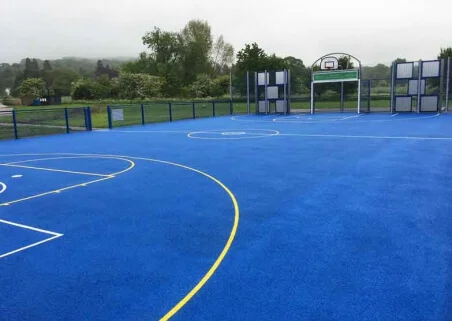
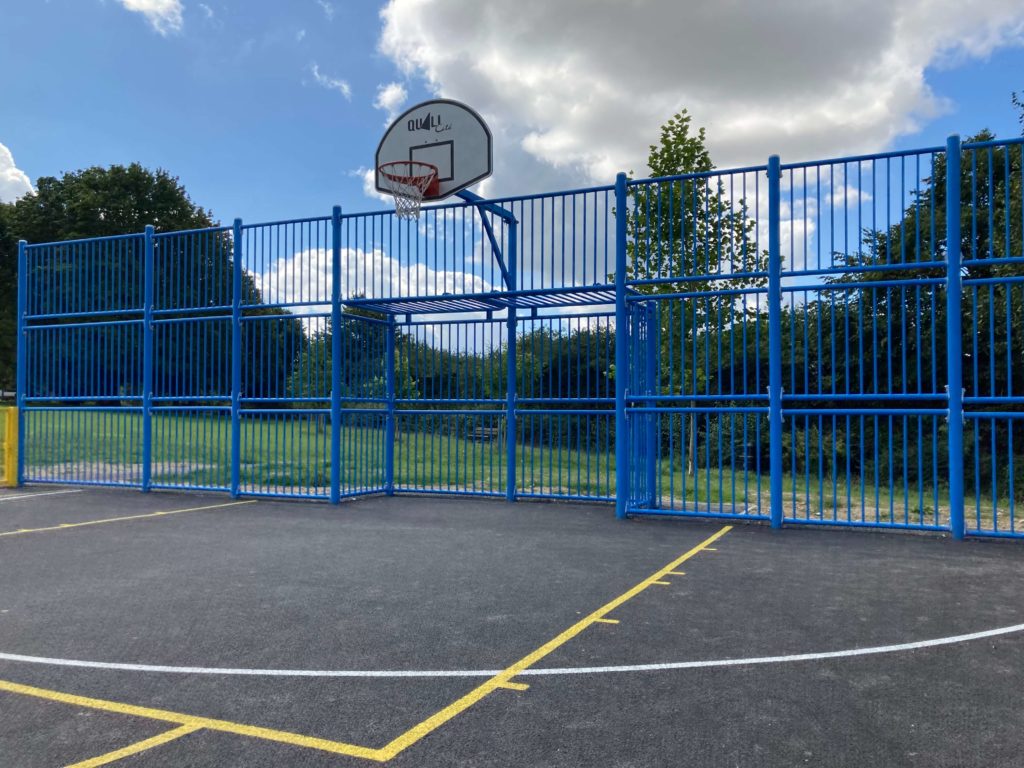
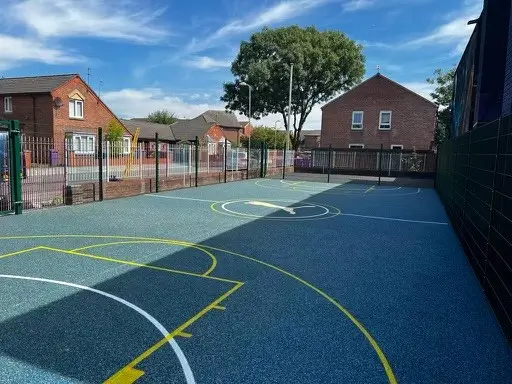
Blue fenced multi-use games area with a basketball hoop on an outdoor court.
Proven success stories

Multi-Use-Games-Area Surfacing Case Studies

Government

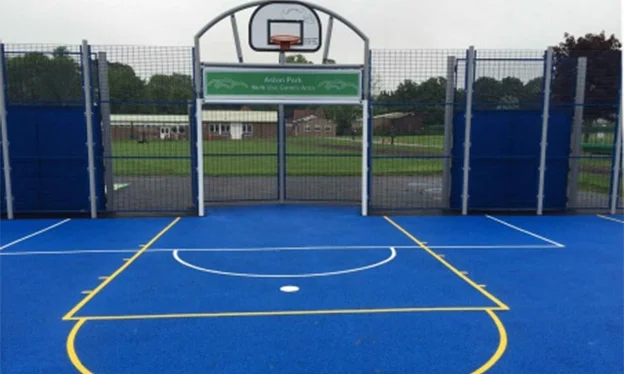
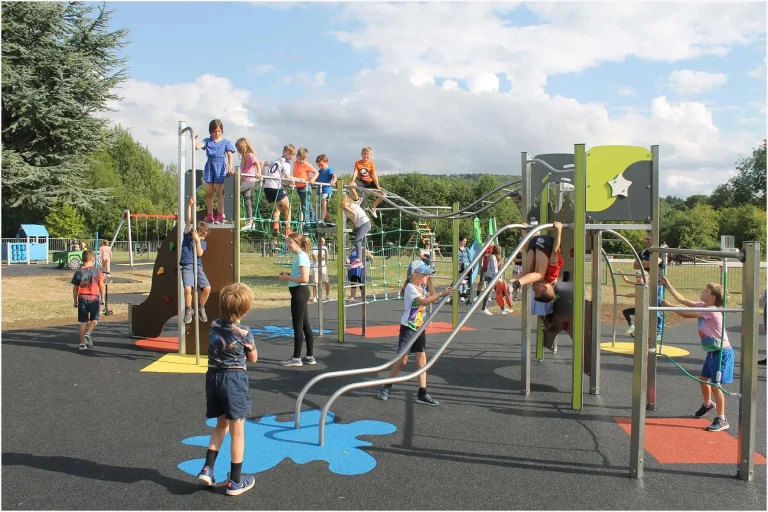
Aston Clinton Park: Creating a Dedicated Play Area for Older Children

The Vision Aston Clinton Park sought to expand its play offering by introducing a dedicated playground for older children to…
Government

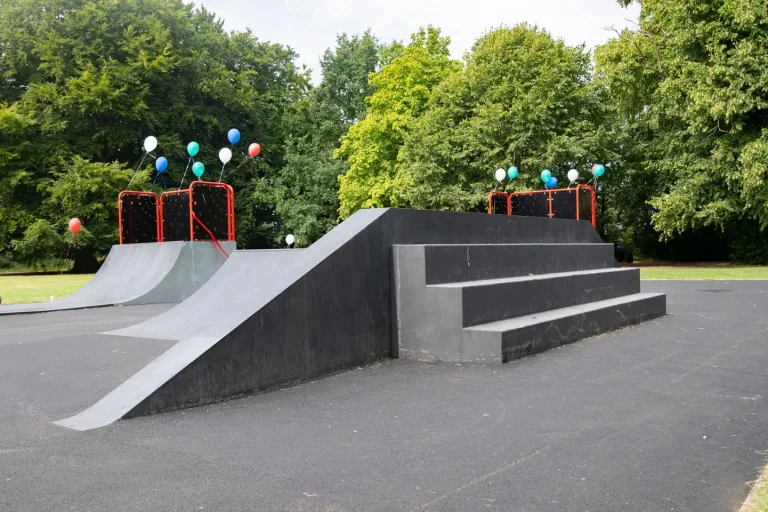
Bedale Skate Park: A Modern Upgrade for a Thriving Skating Community

The Vision Bedale Town Council sought to revitalise its outdated skate park, which had become uninspiring and underused. The goal…
Government

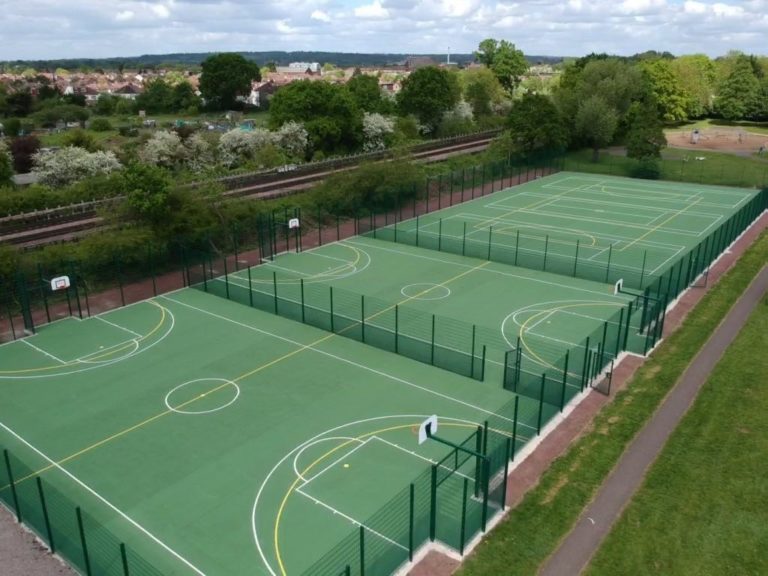
Harrow Council | Triple MUGA Case Study

The Vision Harrow Council wanted a large triple MUGA at West Harrow Recreation Ground. The aim was a genuine multi-sport…
Government

Prestbury Parish Council – MUGA and Gym

The Brief: The Client were looking for a new MUGA sports zone for a range of sporting activities, available to…
FAQs

Frequently asked questions

Everything you need to know about specifying, installing and maintaining Multi-Use-Games-Area Surfacing.
What is the best surface for a MUGA?

There is no single best MUGA surface, only the right one for the sports you care about most. Polymeric gives the best all-round grip and shock absorption for basketball, netball and general play. 3G sports grass suits football and hockey. Acrylic-coated macadam is the hardest wearing where budget and durability lead. We survey the site, ask what will actually be played, then specify from there.
Can MUGA surfacing be replaced on an existing court?

Yes. MUGA surfacing can be replaced or upgraded as part of a refurbishment project.

Can you play football on a polymeric MUGA surface?

Yes. Polymeric surfacing handles five-a-side football well and is one of the few MUGA surfaces that works equally for football, basketball and netball on the same court. If football is the main use and you want a truer roll and slide, 3G sports grass is the better call.

Can line markings be added to MUGA surfacing?

Yes. Line markings can be included as part of a new surface installation or added during refurbishment.

How long does MUGA surfacing last?

A well-installed MUGA surface typically lasts 10 to 15 years, and longer with regular brushing, moss treatment and prompt repair of small splits. Line markings and the top wearing layer usually need attention before the base does, which is why resurfacing rather than rebuilding is the normal midlife option.

Accreditations