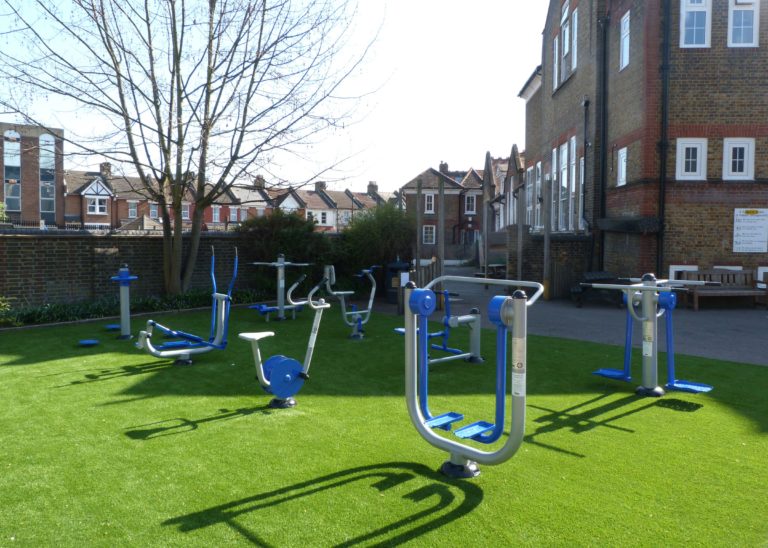
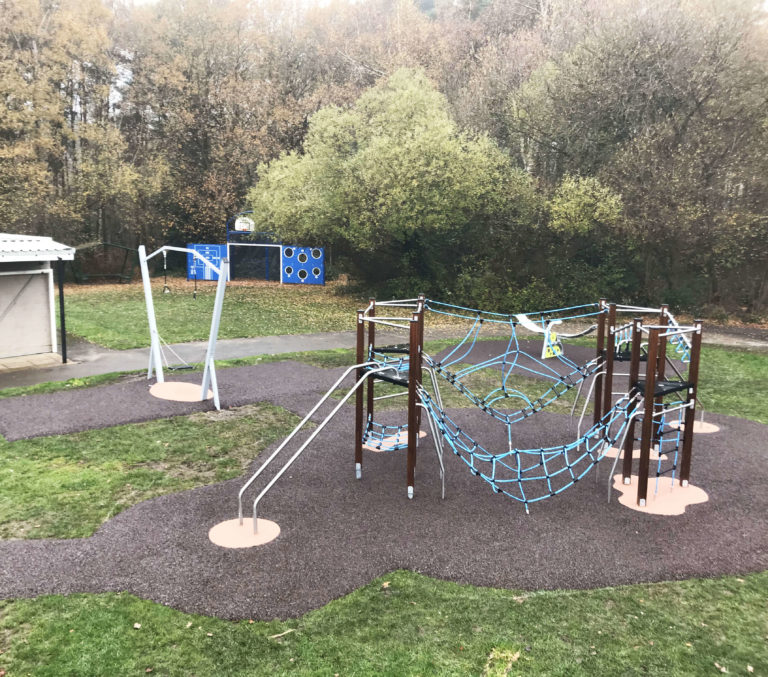
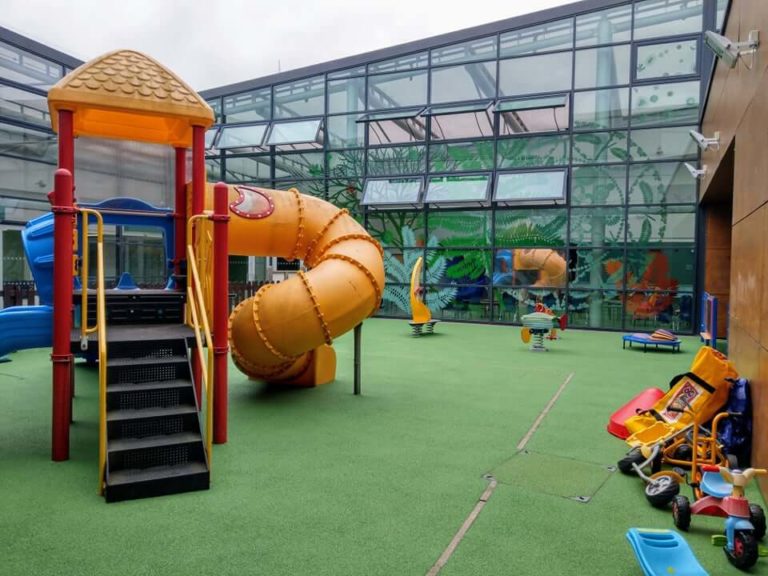
Play grass is artificial grass built as a safety surface. We install it under playground equipment with a rubber shock pad beneath, so the area passes impact testing for the equipment’s fall height while still looking like a lawn rather than a play surface.
The Benefits of Play Grass for Schools & Playgrounds
Standard artificial grass has almost no impact absorption. Play grass is the same idea built as a system, with a tested shockpad underneath, and that difference is what makes it usable under equipment rather than just around it.
Tested to the equipment above it – The shockpad is specified to the critical fall height of each piece of equipment, so the surface meets the standard rather than approximately meeting it.
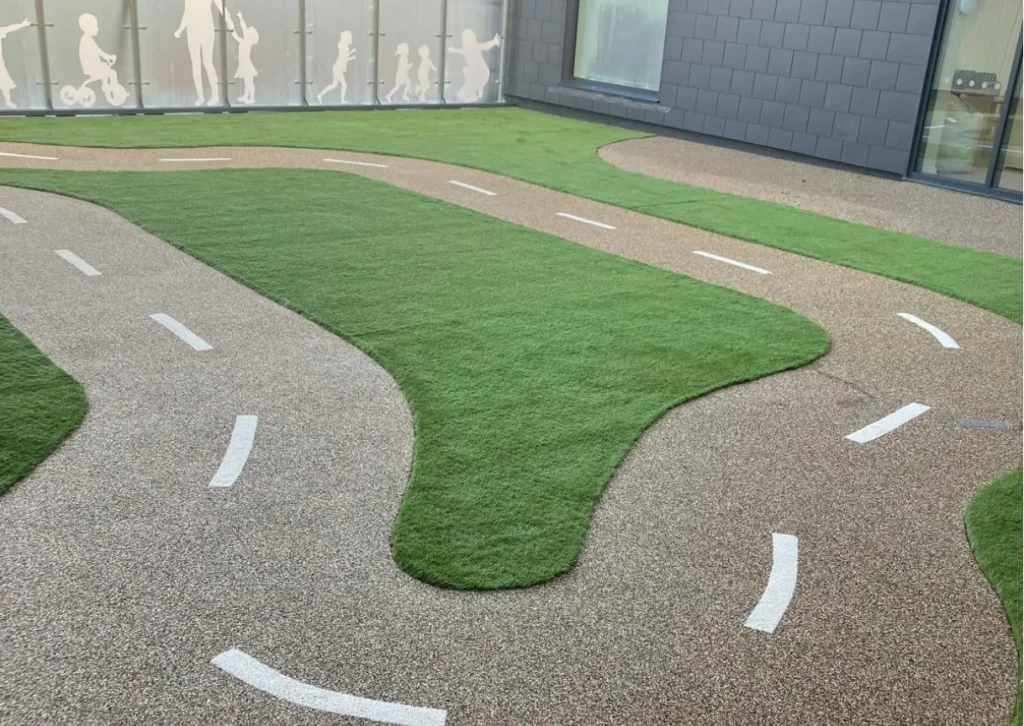
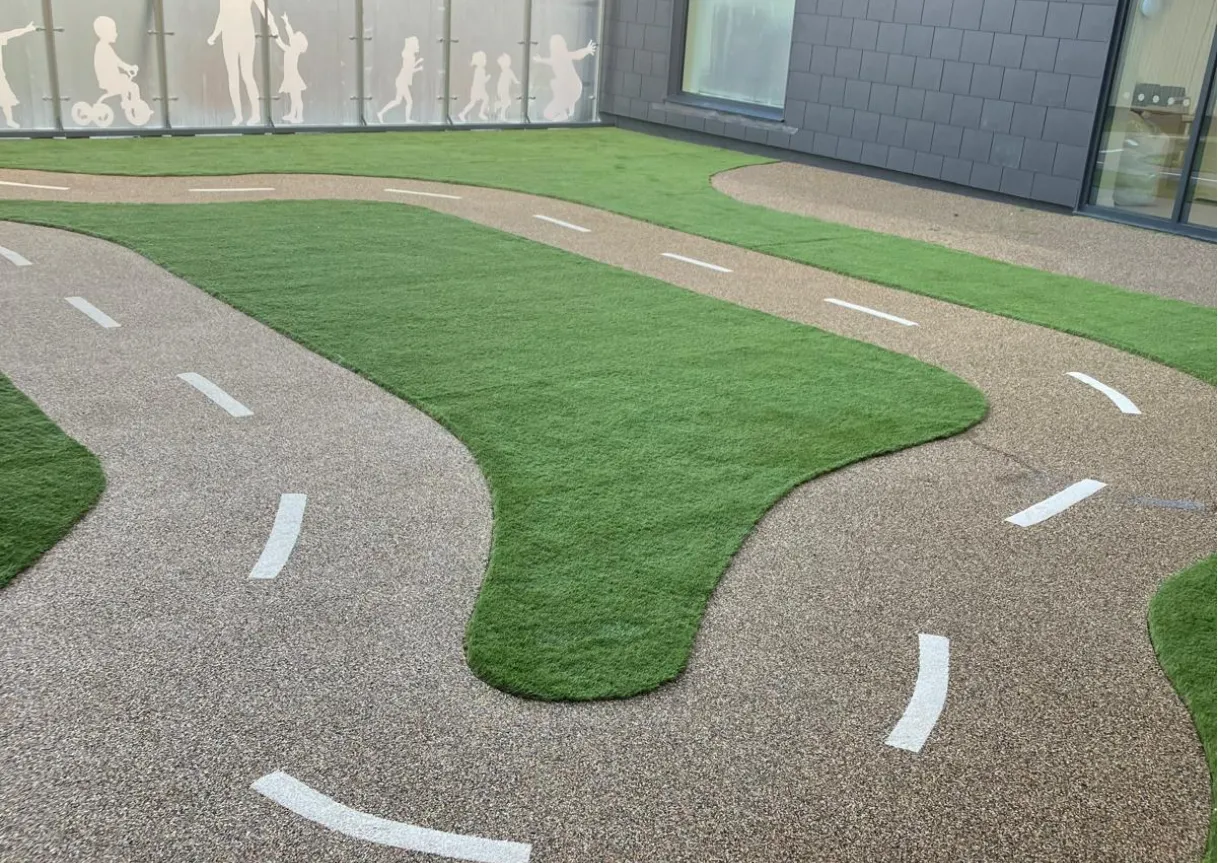
Looks like grass, not like safety surfacing – Parents and governors respond very differently to a green playground than to a brightly coloured rubber one, which matters more in nursery and prep settings than people admit.
Ready to use straight after rain – Free-draining backing and base mean no waiting for the surface to dry, which is the main practical advantage over grass and bark.
Soft landings without the mess – It gives the protection of bark or wetpour with none of the scattering, topping up or bark carried into the building on shoes.
Warmer underfoot than rubber – Lighter pile colours run cooler than dark wetpour in summer, which is worth considering on exposed south-facing playgrounds.
What is the difference between play grass and artificial grass?
The shockpad. Play grass is laid over a rubber shockpad specified to a critical fall height, making it a tested safety surface for use under equipment. Standard artificial grass has no meaningful impact absorption and should not go under a climbing frame.
What critical fall height does play grass achieve?
It depends on the shockpad depth. Thinner pads suit low toddler equipment, and deeper systems handle taller units. We work back from the equipment specification, so the pad is chosen for what it sits under rather than applied uniformly.
Is play grass suitable for nurseries?
It is one of the most common choices for early years, because it is soft, clean, drains fast and has no loose material for young children to pick up or put in their mouths. It also stays usable in weather that would close a bark or grass area.
How do you clean play grass?
Brushing lifts the pile and clears debris, and a wash down handles spills. In nursery settings we usually recommend an antimicrobial infill, which deals with the hygiene question that always comes up.
Does play grass need replacing as often as bark?
No. Bark needs topping up annually and full replacement every few years. Play grass typically lasts eight to twelve years, and the shockpad underneath lasts longer still, so it is usually only the grass layer that is ever replaced.