Wetpour
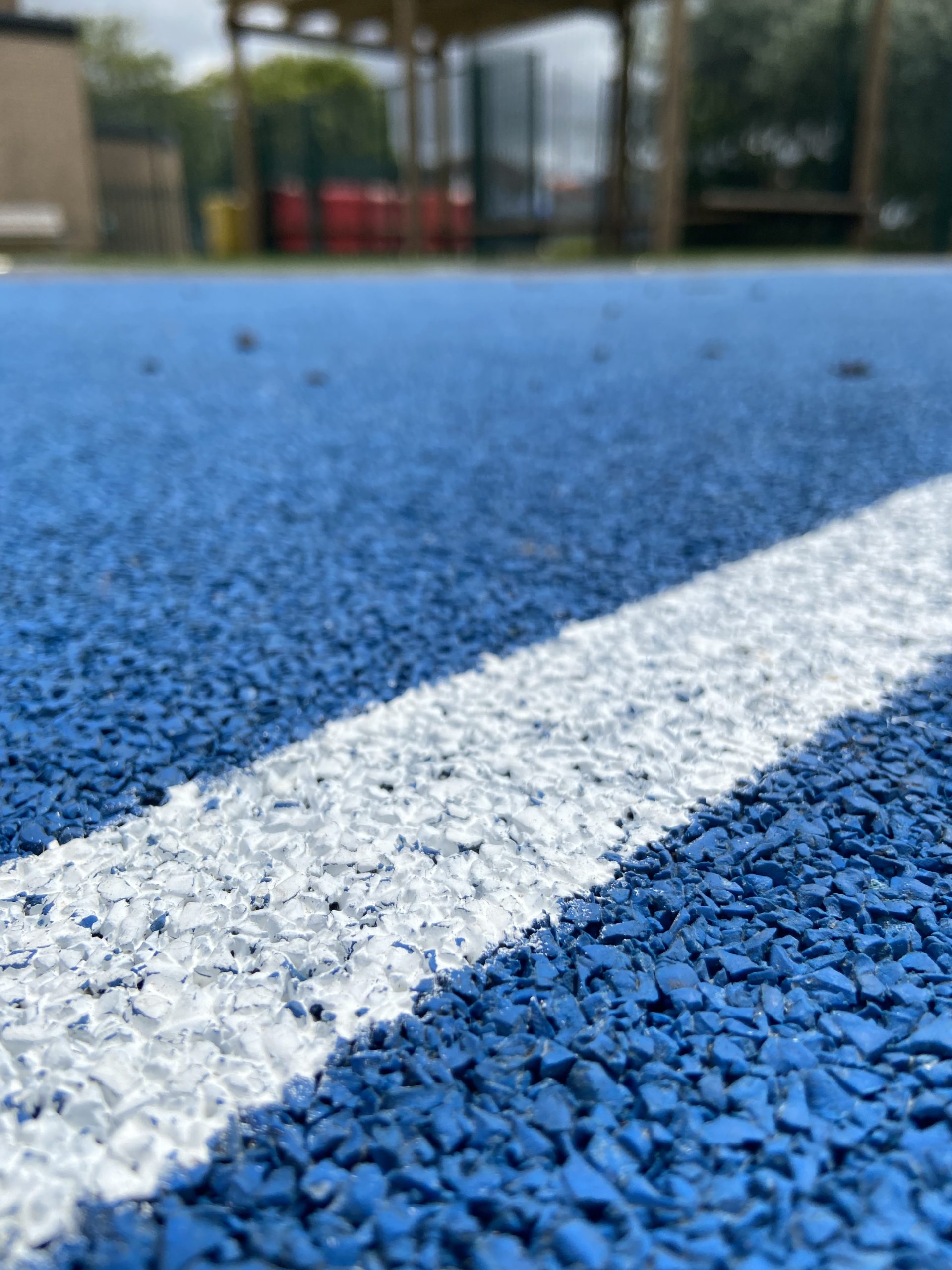
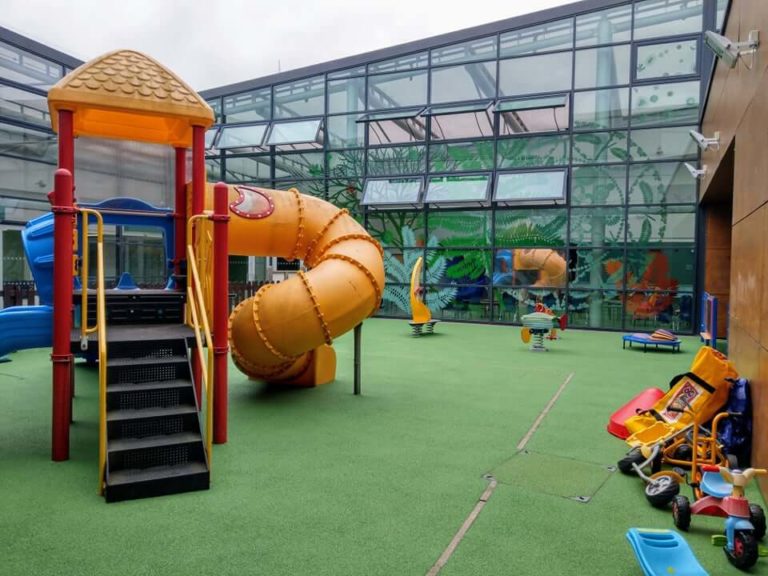
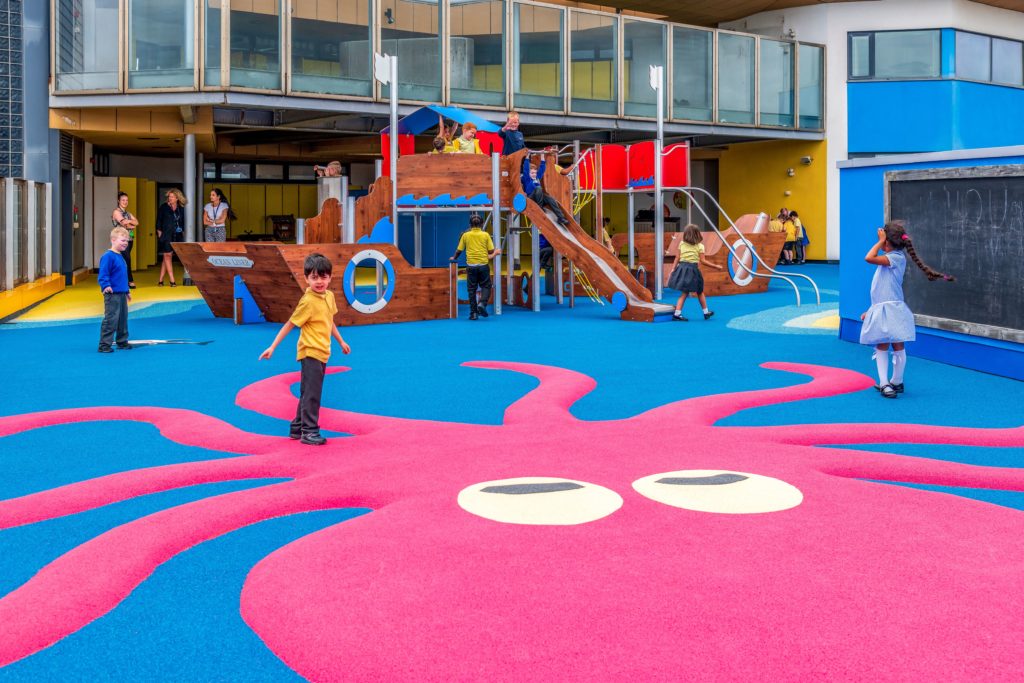
Wetpour is the seamless rubber surface you see under most school play equipment. We design and install it across schools, nurseries and parks, mixing colours and graphics into the surface itself and laying depths tested to the fall height of whatever sits on top.
Filter
Sub-category
Why it matters
The Benefits of Wetpour Surfacing
- Shaped to the space – Because it is poured wet, wetpour fills curves, corners and awkward gaps that mats and tiles cannot, with no cut edges or joins.
- Depth matched to the equipment – We lay the shockpad to the critical fall height of the equipment above it, so the surface is specified to the standard rather than to a price.
- Colour and graphics built in – Numbers, tracks, hopscotch grids and logos are formed within the rubber itself, so they wear at the same rate as the surface rather than fading off the top.
- Nothing loose to scatter – Unlike bark or loose fill, wetpour stays exactly where it was laid, which cuts topping up, sweeping and the mess that gets walked indoors.
- Smooth enough for everyone – The continuous surface takes wheelchairs, walking frames and buggies without lips or edges, which matters more on SEN sites than almost anything else.
Proven success stories
Wetpour Case Studies
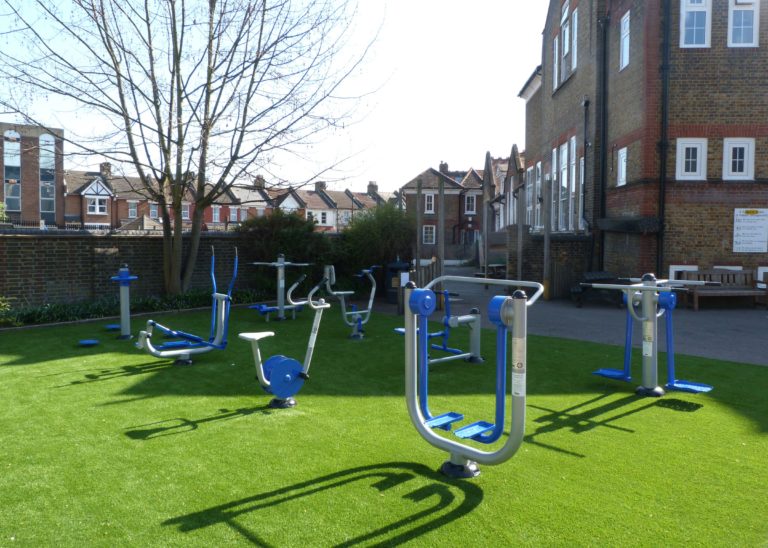
Outdoor Gym|Stamford Hill School- Outdoor Gym with Artificial Grass
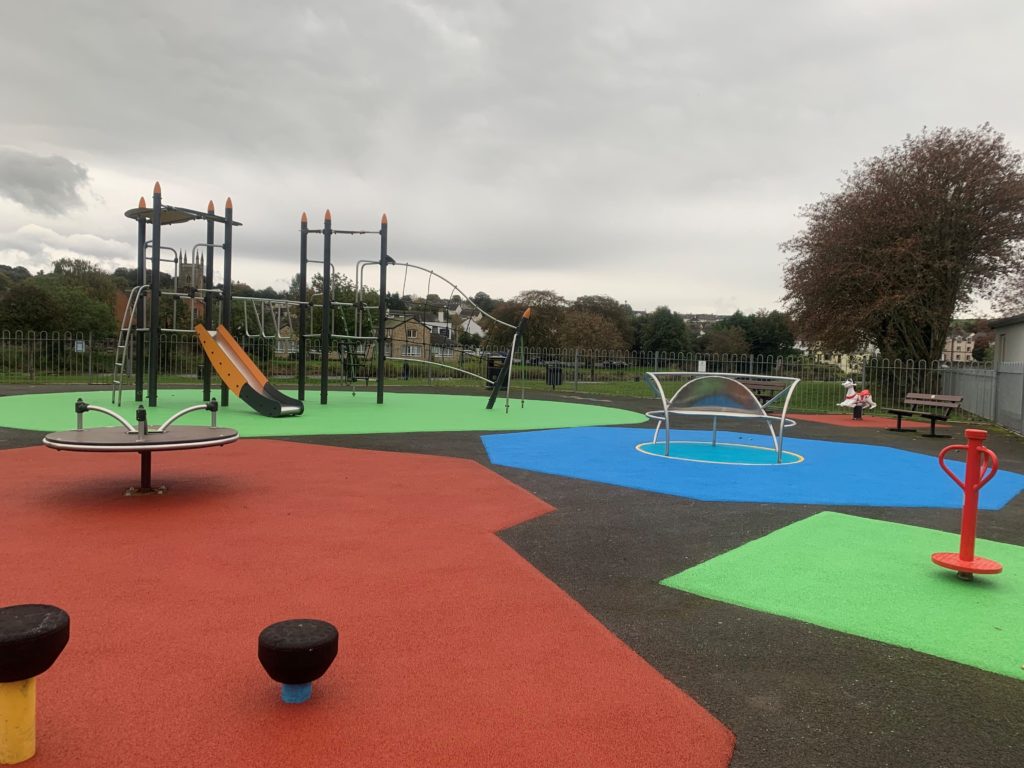
Play | Canolfan Yr Afon Infant School Outdoor Classroom and Steel Trim Trail
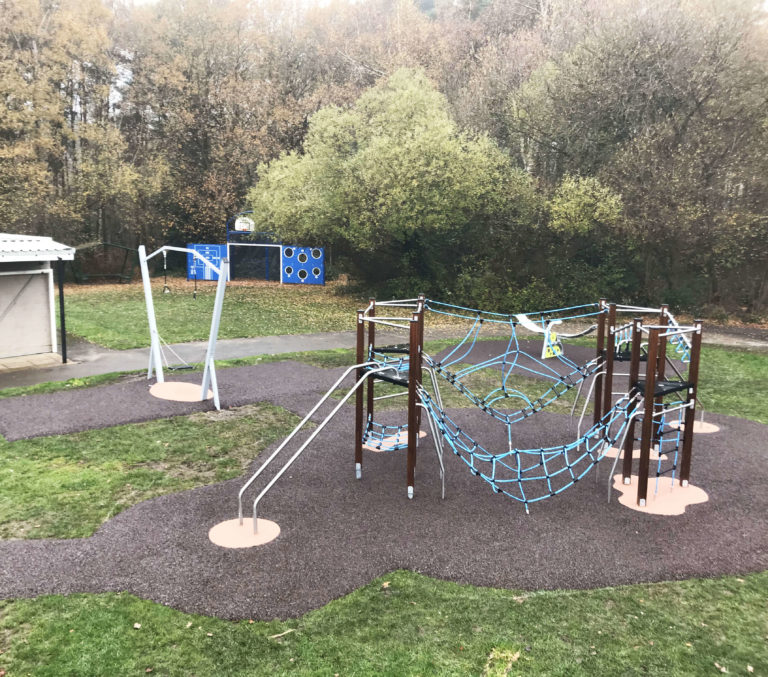
Play|Fleet Town Council – Playground and Bonded Rubber Mulch Surfacing
Surfacing| Tweendykes School, Wet Pour Surfacing
FAQs
Frequently asked questions
Wetpour is a two-layer rubber surface mixed and poured on site. A shockpad of recycled rubber crumb goes down first, then a coloured EPDM wear layer on top. It cures in place into one continuous piece with no joins, which is what makes it suitable under play equipment.
It depends entirely on the fall height of the equipment. A low toddler unit might need 40mm total. A tall climbing frame can need 100mm or more. The depth is what provides the impact protection, so it is the one thing that should never be trimmed to hit a budget.
Fifteen years is realistic on a well-installed surface with a properly prepared base. Most failures we are called to repair are base failures rather than rubber failures, which is why we spend as much time on the sub-base as the surface itself.
Yes. Splits, shrinkage gaps and worn patches under swings can be cut out and re-poured, and the repair bonds into the existing surface. It is far cheaper than replacement, and worth doing early because a small split lets water into the base where it does real damage.
Wetpour gives you colour, graphics and the smoothest finish, so it suits schools and accessible play. Bonded rubber mulch gives a natural bark look and copes better with tree roots and uneven ground, so it suits woodland and park settings. Neither is better outright, and we will recommend based on the site rather than the margin.
Accreditations