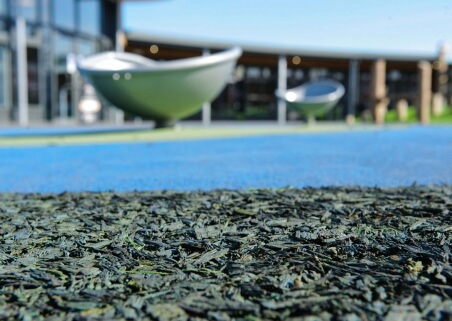
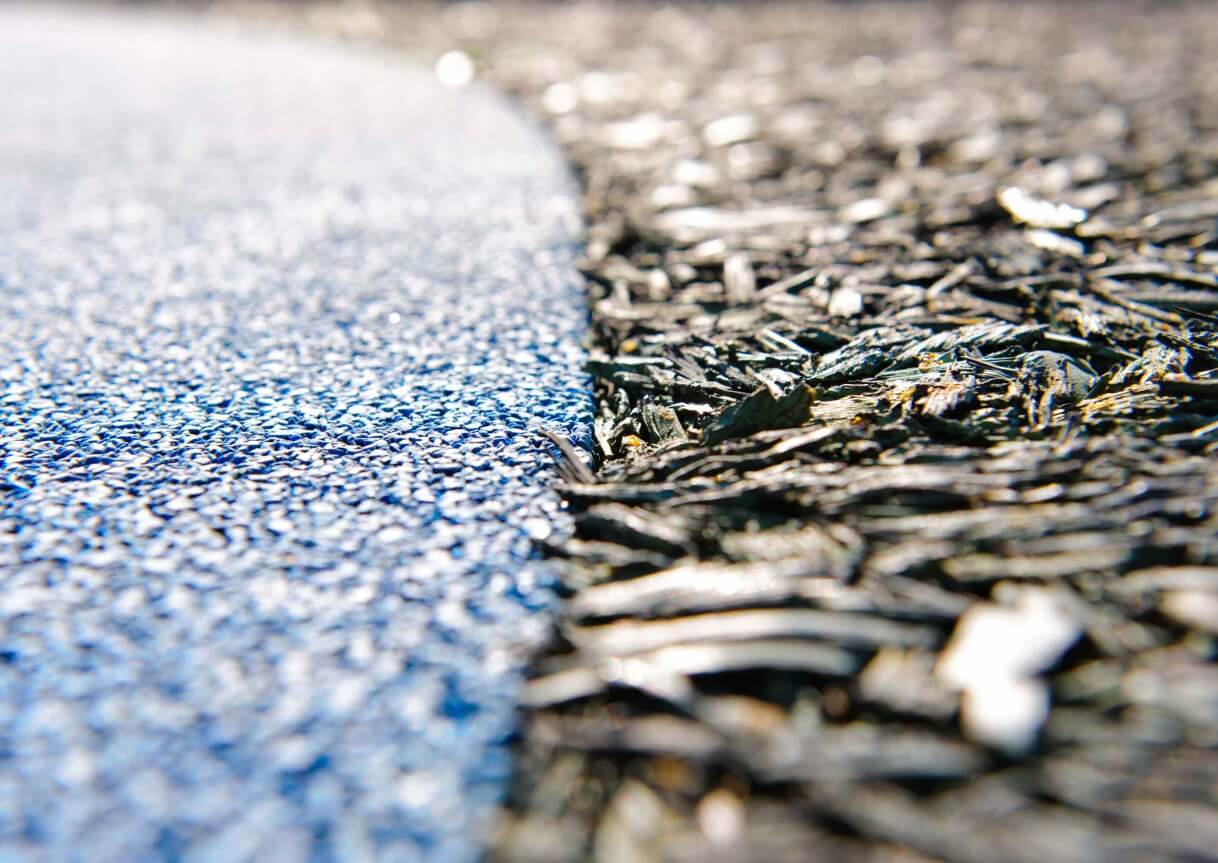
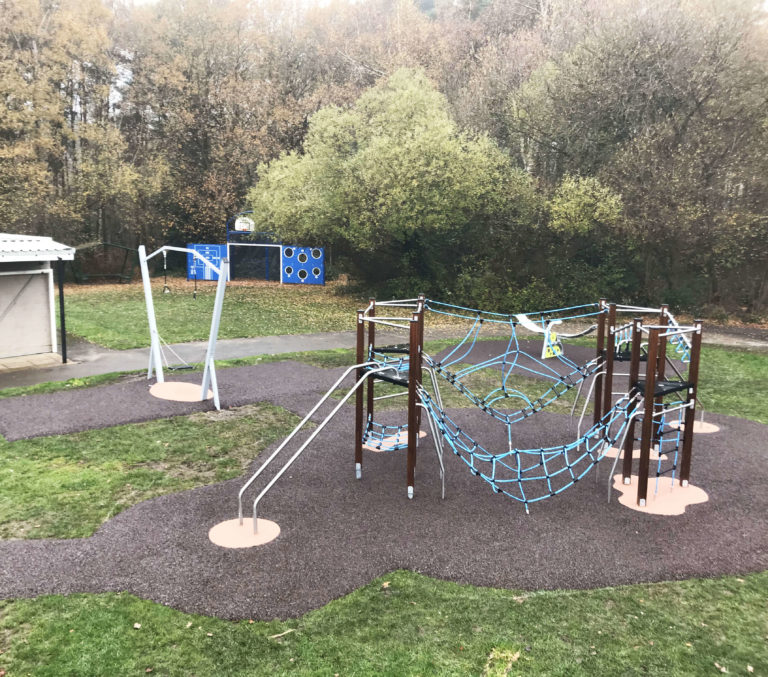
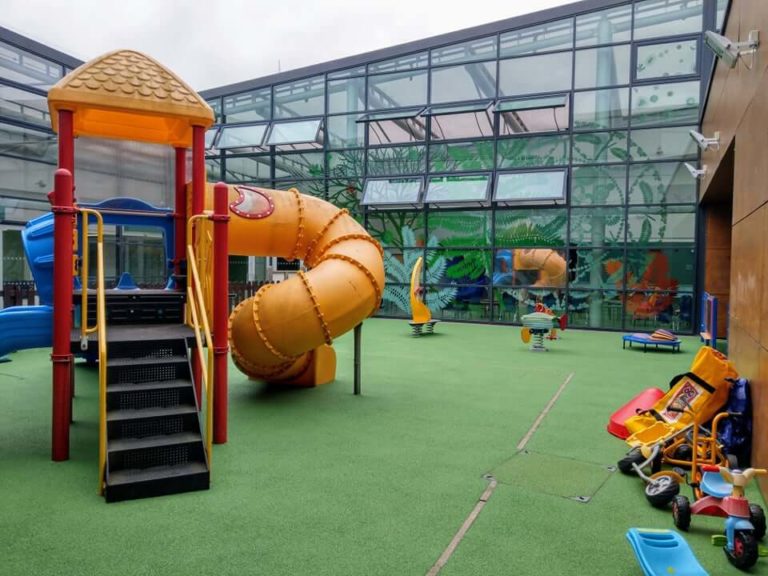
Bonded rubber mulch looks like bark and behaves like a safety surface. We install it across playgrounds, trim trails and woodland play areas, laid over existing ground and bound with resin so nothing scatters, nothing needs topping up and roots stay undisturbed.
Loose bark is cheap to lay and expensive to keep. Bonded rubber mulch gives you the same natural appearance permanently, because the rubber is mixed with resin and trowelled in place rather than tipped loose.
Looks natural, performs like rubber – Brown and green blends read as bark from a few paces, but the surface is impact-tested and stays put underfoot.
No topping up, ever – Loose fill migrates, gets kicked out and needs replenishing every year. Bonded mulch is laid once and stays at the depth it was specified.
Works over roots and slopes – Because it follows the existing contour, we can lay it around trees and across gentle gradients where a poured or tiled surface would not sit properly.
Water drains through – The bonded structure is porous, so rain passes into the ground below rather than sitting on the surface or needing a drainage run.
Fewer trip hazards than bark – There is no build-up, no bald patches and no hidden depth changes, which are the three things that cause most bark-related falls.
Between 50mm and 125mm, depending on the fall height of the equipment above. Lower toddler equipment needs less, tall climbing units need more. We calculate the depth from the equipment specification rather than applying a standard figure across the whole site.
Does rubber mulch get hot in summer?
It warms more than grass but less than tarmac or dark wetpour. Lighter colour blends run cooler, and in genuinely exposed areas we would suggest shading or a lighter blend rather than pretending it is not a factor.
How long does bonded rubber mulch last?
Around 10 to 15 years. The resin binder is what ages rather than the rubber, so surfaces tend to soften and loosen at the edges before they fail in the middle. Localised repairs are straightforward and extend the life considerably.
Can rubber mulch be laid over an existing surface?
Often, yes. Bonded mulch can go over existing tarmac, concrete or a compacted stone base, which saves the cost and disruption of excavation. It cannot go over loose bark or soft ground without preparation first, so the site survey determines this.
Is rubber mulch safe for children?
Yes. The rubber we use is clean recycled crumb, and the bonded surface is impact tested to the relevant standard. There are no loose pieces to be picked up or swallowed, which is one of the practical advantages over loose fill in nursery and SEN settings.